
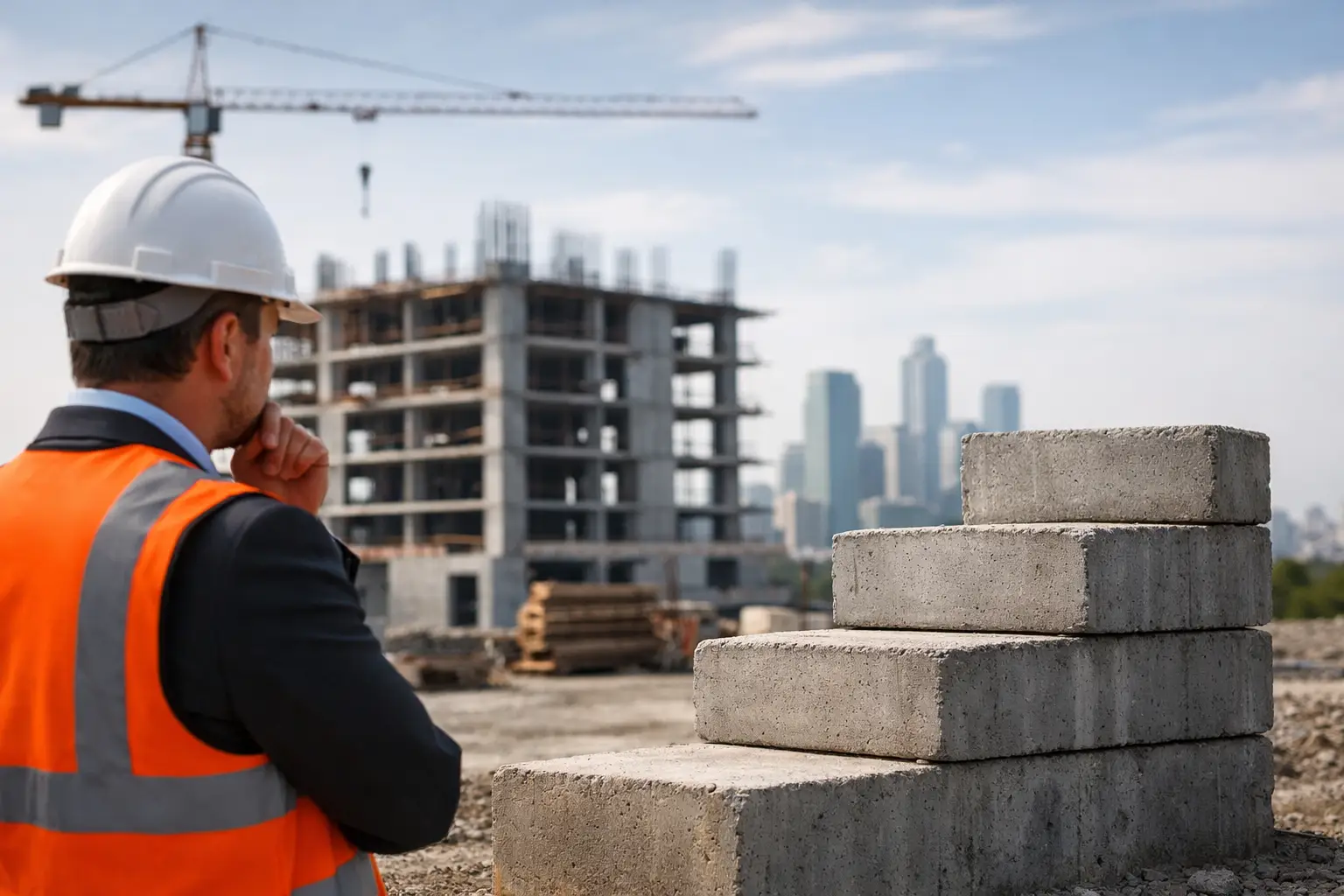
A lot of construction owners hit the same wall at roughly the same stage. Revenue grows, the phone rings, crews stay busy, and from the outside the company looks successful. But inside, the owner is stretched thin, profits are inconsistent, cash gets tight at the worst times, and every problem still rolls uphill to one person. That is why construction companies plateau – not because demand disappears, but because the business never evolved beyond the owner.
This is the hard truth many contractors avoid. What got you from zero to a few million in sales will not get you to the next level. Hustle works early. Talent in the field matters. Strong relationships help. But once the company reaches a certain size, growth stops being about effort and starts being about structure.
Why construction companies plateau after early growth
Most contractors do not plateau because they got lazy. They plateau because they built a job-producing machine, not a business. Those are not the same thing.
In the early years, speed covers a lot of mistakes. The owner sells the work, estimates the jobs, checks production, solves customer issues, approves purchases, and manages the money. It feels productive because things are happening all day. But it creates a ceiling. Once every major function depends on one person, the company can only grow to the level that one person can carry.
That ceiling usually shows up in predictable ways. Jobs are sold without enough margin. Production varies by crew or superintendent. Office systems lag behind field activity. Hiring happens late. Collections happen late. Bids go out, but follow-up is inconsistent. The owner becomes the chief estimator, sales manager, operations manager, and crisis response department.
At that point, growth starts hurting instead of helping. More sales create more stress. More crews create more mistakes. More volume creates more cash pressure. So the company flattens out, not because it lacks opportunity, but because it lacks control.
The real reasons growth stalls
The owner is still the system
If the owner has to approve every decision, answer every question, and step into every problem, there is no real company infrastructure. There is just a hard-working owner holding everything together.
This is one of the biggest reasons why construction companies plateau. Owners often believe they are protecting quality by staying involved in everything. In reality, they are training the organization to depend on them. That makes delegation weak, accountability fuzzy, and growth fragile.
The fix is not to care less. The fix is to build repeatable standards for estimating, production, communication, purchasing, billing, and closeout. When the process is clear, people can perform without constant rescue.
Revenue is growing faster than profit
A lot of contractors chase top-line growth because it feels like momentum. But if markup is weak, change orders are sloppy, and labor productivity is inconsistent, more revenue can make the business worse.
This is where many owners fool themselves. They say, “We did more this year than last year,” while the bank account says otherwise. Plateau is not always flat sales. Sometimes it looks like bigger numbers with the same stress and no real financial improvement.
A business that cannot convert work into clean profit is not scaling. It is just getting heavier.
Job costing is either late or ignored
If you do not know which jobs make money, which crews produce well, and where margins are lost, you cannot improve with confidence. You are managing by instinct.
Too many contractors review the financial damage after the job is done. By then, the lesson is expensive and late. Real control means tracking labor, materials, equipment, subcontractors, and gross profit while the work is still in motion.
When job costing is weak, estimating stays weak too. The company keeps repeating the same pricing mistakes and wonders why growth feels harder every year.
There is no management layer
A business cannot keep expanding if every employee reports directly to the owner. At some point, someone has to own production. Someone has to own office flow. Someone has to own sales follow-up. That does not mean building bloated overhead. It means assigning real responsibility with measurable outcomes.
Many contractors resist this because they do not want payroll to increase. Fair concern. But staying owner-centered has a cost too – delays, rework, missed sales opportunities, and burnout.
The right management layer pays for itself when it improves capacity, consistency, and decision speed. The wrong hire creates more problems, so this requires discipline. But refusing to build leadership capacity guarantees a plateau.
Sales are reactive, not intentional
Some construction companies live off referrals and reputation for years. There is nothing wrong with that until the flow becomes inconsistent. Then the owner gets trapped in a familiar cycle: too busy to market when work is strong, too nervous to plan when the pipeline thins out.
That is not a growth strategy. That is a roller coaster.
Plateau happens when lead generation, qualification, estimating, follow-up, and closing are treated as random activity instead of a managed pipeline. Good companies do not just wait for work. They measure lead sources, conversion rates, average job size, sales cycle length, and backlog quality.
Operational chaos gets mistaken for ambition
Some owners wear chaos like a badge of honor. They are proud of solving problems all day. They think constant urgency means the business is active and strong.
It usually means the opposite. Constant emergencies point to poor planning, unclear roles, weak communication, or broken systems. Chaos is expensive. It burns labor, damages customer experience, creates preventable mistakes, and keeps the owner chained to the business.
A growing contractor needs rhythm, not drama. Weekly meetings, production planning, clear scoreboards, and standard operating procedures are not corporate fluff. They are what keep a construction company from stalling under its own weight.
The plateau is often a leadership problem
This part stings, but it matters. In many companies, the business has already outgrown the owner’s current leadership habits.
That does not mean the owner is failing. It means the role has changed. A great technician, installer, builder, or project problem-solver does not automatically become a strong business leader by accident. Different skills are required.
A company at the next stage needs vision, financial discipline, performance management, hiring standards, and decision-making structure. It needs an owner who can move from doing the work to leading the machine that produces the work.
That transition is uncomfortable. Some owners avoid it by staying buried in field issues because they feel competent there. But the company keeps paying for that choice. Leadership at this level means spending more time on numbers, people, planning, and accountability than on daily heroics.
How to break through the ceiling
The first step is diagnosis. Not motivation. Not another busy month. You need to know where the constraint actually is.
For one contractor, the problem is underpricing. For another, it is lack of field supervision. For another, it is the absence of a sales process. For another, it is a company that depends on one owner’s memory instead of documented systems. The plateau is real, but the cause is not identical in every business.
Once the constraint is clear, the work usually falls into a few core areas. Financial control has to improve so pricing, margins, and cash flow are visible. Operations need standard processes so jobs do not depend on personality. People need clearer roles and accountability so the owner is not the default manager of everything. Marketing and sales need a consistent pipeline instead of hope. Productivity has to be measured in the field, not assumed.
This is why a framework matters. Random fixes create random results. A structured operating model gives the owner a way to build a business that can scale without adding chaos every time revenue rises.
Contractor Coaching has built its reputation around that exact shift – helping contractors move from owner-dependent growth to a company with real systems, financial control, and management discipline. That matters because most plateaued businesses do not need more theory. They need practical change tied to how construction really works.
What owners get wrong about the next stage
Many assume the next stage of growth simply requires more jobs, more people, or more advertising. Sometimes it does. But if the underlying business model is weak, more volume just puts stress on a bad structure.
The next stage usually requires fewer assumptions and more discipline. Better estimating. Better numbers. Better production oversight. Better meetings. Better hiring. Better role clarity. Better follow-up. None of that sounds flashy. That is exactly why it works.
There is also a trade-off to manage. More structure can feel slower at first. Documentation takes time. Training managers takes patience. Reviewing job cost reports requires focus. But that temporary friction creates long-term capacity. Without it, the owner stays trapped in a cycle of hard work with a fixed ceiling.
If your company has been stuck at the same level, the message is simple. Plateau is not bad luck. It is a signal. The business is telling you that effort alone is no longer enough. When you answer that signal with systems, leadership, and financial control, growth stops feeling like pressure and starts looking like progress.