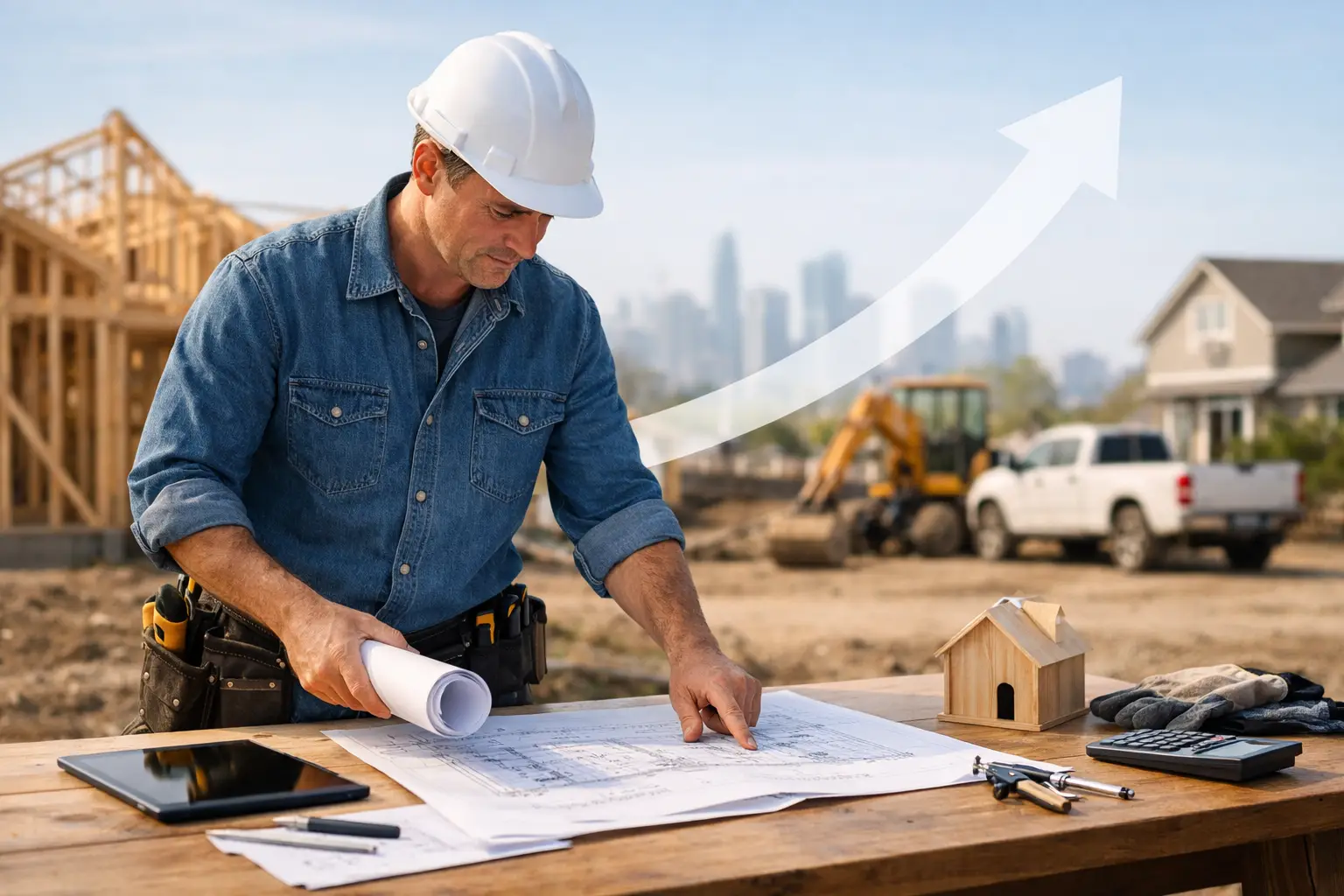

If your company depends on you to price every job, answer every problem, calm every client, and push every project forward, you do not have a business yet. You have a demanding job with overhead. That is exactly why construction business training matters. Done right, it does not give you motivational talk or generic management theory. It gives you structure, numbers, and operating discipline so the company can perform without burning you out.
A lot of contractors wait too long to get serious about the business side. They assume the answer is more leads, better crews, or longer hours. Sometimes those things help for a week or a quarter. They do not fix the real problem if your pricing is weak, your cash flow is inconsistent, your field management is reactive, and every important decision still lands on your desk.
That is where training earns its keep. Not by making you busier, but by making your company more controlled.
What construction business training should actually do
Most contractors do not need more information. They need a better operating system. Good construction business training should help you move from owner-dependent chaos to repeatable performance across six core areas: vision, financial control, marketing, operations, people, and productivity.
If training only teaches one of those in isolation, results usually stall. You can improve marketing and still lose money on jobs. You can clean up job costing and still stay trapped if nobody else can make decisions. You can hire more people and create a bigger mess if roles, accountability, and process are unclear.
The point is not to become an expert in theory. The point is to build a company that knows how to sell work at the right margins, produce that work consistently, collect cash on time, and operate without a daily fire drill.
That takes training built for contractors, not for generic small business owners. Construction has its own pressures – estimating mistakes, change orders, production delays, labor issues, subcontractor coordination, weather, client communication, and tight cash demands. Advice that ignores those realities usually sounds smart and works poorly.
Why smart contractors still struggle without training
Many construction business owners are highly skilled builders who were never taught how to run a company. That is not a character flaw. It is how the industry works. Most people learn how to produce the work first. Then one day they own the company and are expected to know finance, leadership, sales, hiring, planning, and management.
That gap shows up in familiar ways. Revenue grows, but profit stays thin. The backlog looks strong, but cash stays tight. The owner hires help, but the team still waits for direction. Office staff are busy, yet information gets lost. Field crews work hard, but schedules slide and mistakes repeat.
None of that is random. It is what happens when the company grows faster than its systems.
Training gives you a framework to diagnose what is broken and fix it in the right order. That order matters. For example, if your pricing model is weak, adding sales volume can make things worse. If your production process is loose, increasing lead flow creates more customer headaches. If your team is unclear on authority, delegation turns into confusion instead of relief.
The areas that matter most
The best place to start is financial control. A contractor can survive weak marketing for a while. Surviving weak numbers is harder. You need to know your markup, gross profit targets, overhead burden, break-even point, and cash position with clarity. If you are still pricing by instinct or matching competitors without understanding your required margins, you are taking on risk you cannot see.
From there, operations usually need attention. This means how jobs move from sale to production to completion. Estimating handoff, scheduling, purchasing, quality control, communication, and closeout all need defined steps. Without that structure, every project becomes a custom management problem. That drains time and creates expensive inconsistency.
People come next, though in some companies they are the immediate pressure point. Training should help you define roles, assign accountability, and set expectations for performance. A company cannot scale if everyone reports upward for every answer. The owner has to stop being the only decision-maker in the room.
Marketing and sales also matter, but not as isolated activities. Lead generation only has value if you know which jobs to pursue, how to sell on value instead of price alone, and how to maintain margin discipline. Chasing any job that rings the phone is not a growth strategy. It is a chaos strategy.
Productivity ties the whole system together. That means time management at the owner level, but it also means meeting cadence, communication flow, production planning, and reducing the waste built into everyday operations. In many contracting businesses, the biggest profit leak is not dramatic. It is the constant drag of poor coordination.
What to look for in construction business training
Not all training is equal, and this is where contractors waste money. If the material is broad, inspirational, or filled with language that sounds polished but does not translate to your day-to-day reality, be careful.
Strong training should be specific. It should talk plainly about estimating, collections, markup, backlog quality, hiring, field accountability, and owner dependence. It should give you a process for implementation, not just concepts to think about. You want something that helps you answer practical questions.
Are we charging enough?
Why does cash stay tight even when sales are up?
Why do jobs rely on me to keep moving?
Why does my team stay busy but not productive?
Why am I working nights and weekends in a company that should be supporting my life?
Good training also includes accountability. Information by itself rarely changes a contractor’s business. Most owners already know a few things they should be doing and are not doing consistently. The issue is execution. That is why a structured approach, whether through mentoring, coaching, or a proven framework, tends to outperform self-study alone.
This is one reason specialized firms like Contractor Coaching stand out. The advantage is not just experience. It is relevance. When the guidance is built around the actual economics and operational realities of construction, contractors can apply it faster and trust that it fits their world.
The trade-off contractors need to accept
Here is the part many owners resist: real training usually requires you to slow down long enough to fix the machine. That can feel uncomfortable when you are already overloaded.
You may need to spend time reviewing financial statements you have been avoiding. You may need to standardize processes that currently live in your head. You may need to hold managers more accountable. You may need to raise prices, narrow your ideal job profile, or stop saying yes to work that keeps the crew busy but drags down the company.
Those moves are not always easy in the short term. Some create friction before they create relief. But if you avoid them, you stay stuck in the same cycle – high effort, low control, and disappointing profit.
It also depends on your stage of growth. A smaller company may need basic financial discipline and sales structure first. A larger contractor may need management layers, scoreboards, and stronger production systems. The right training should meet you where you are, but still challenge the habits that are holding the business back.
How training turns into results
Results show up when the business becomes more predictable. Estimates improve because pricing is grounded in real overhead and margin targets. Cash flow improves because billing, collections, and production are more disciplined. Projects run better because there is a clear handoff from sales to operations. Team members step up because roles and authority are defined. The owner gets time back because fewer decisions flow through one person.
That last point matters more than many contractors admit. The goal is not simply a bigger company. It is a better company. One that produces profit without consuming your life. One that can support your family, your team, and your long-term plans without needing you in the middle of every issue.
That is what real construction business training is supposed to build. Not more activity. Not more noise. A business with structure.
If you are tired of carrying the whole company on your back, take that frustration seriously. It is not just stress. It is a signal that your business needs a stronger operating model, and the sooner you build it, the sooner the company starts working for you instead of against you.